


Hunting Snacks
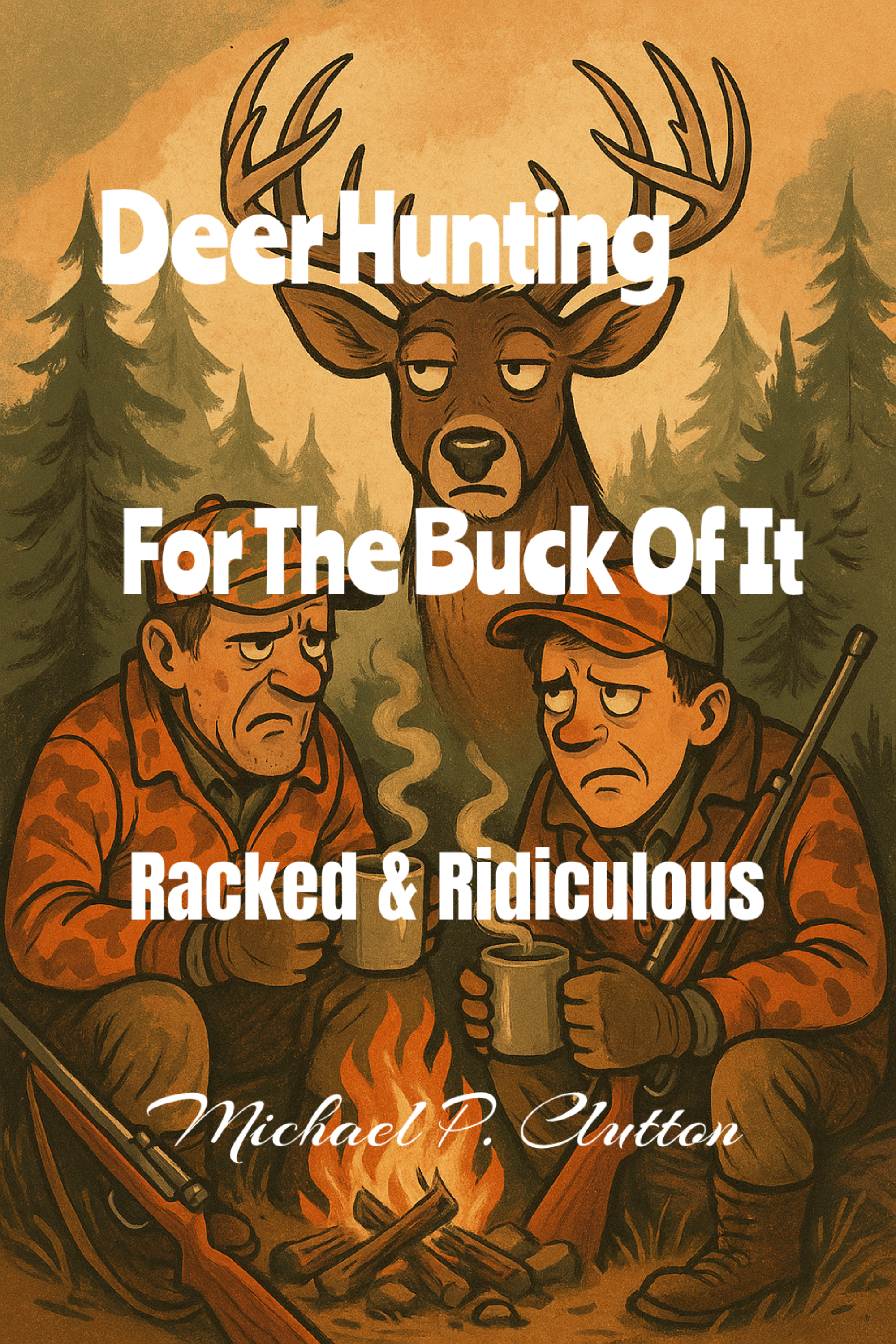
Part confession, part cultural autopsy, and entirely too honest, Deer Hunting for The Buck Of It is the ultimate companion for the optimistic outdoorsman—or anyone who enjoys watching them suffer with dignity.
The Long Wait Between Snacks
There’s a point in every hunt when the trees stop being majestic and start looking judgmental. That’s when the waiting really begins—not the cinematic kind with mist and destiny, but the hour-by-hour kind that feels like a psychological experiment run by squirrels.
Hour 1: I’m alert, coiled, a woodland monk. Every sound matters. The forest is a living symphony, and I, its reverent audience. Breath even, posture good, snack bag unopened. I could do this forever. (Estimated time elapsed: nine minutes.)
Hour 2: The mind begins to wander. I start negotiating with nature. If the deer show up now, I’ll volunteer for park clean-up. I’ll stop making fun of people who wear camo to the grocery store. I’ll even—no, that’s too far—fine, I’ll skip breakfast beer next season. Wind shifts. Nothing happens. Nature does not negotiate.
Hour 3: Snack theology emerges. “If I eat quietly, it doesn’t count.” Crinkle the wrapper slowly enough and maybe physics will forgive you. The peanuts taste like dusted salvation. Somewhere in the distance, a leaf falls, and I assign it meaning.
“Patience,” I tell myself, “is a form of spiritual cardio.” Mostly it’s jaw exercise.
(Study data suggests the average hunter consumes 2,300 calories of trail mix before witnessing a single mammal. The remaining 700 are absorbed by shame.)
Hour 4: The heater gives off its faint, chemical whisper—burnt fuel and faint hope. My water’s gone, but my bladder disagrees. I transcend. I leave the body behind, or at least I would if the seat cushion weren’t holding it hostage. The wind stirs again, the camo flaps softly, and a squirrel sneezes—a sound so delicate and human it feels like divine punctuation.
By now the woods have turned cosmic. Every creak of fabric becomes a message from the universe. I interpret each one incorrectly. Snack wrappers join the liturgy: salt, crunch, repentance. Somewhere, I recall the earlier math—$2,000 of gear for $40 of meat—and revise it: 4,000 calories for one brief glimpse of moving bark.
Patience doesn’t build character; it exposes it. Mine looks like a man debating whether trail mix counts as a coping mechanism.
Still, in the stillness, something shifts. Not enlightenment—just a calm acceptance that time isn’t passing, it’s pacing in circles. The kind of peace you only find after losing every argument with your own stomach.
Some call it perseverance. I call it waiting for a deer-shaped miracle between snacks.
The Sound of Your Own Thoughts (and Distant Gunfire)
Somewhere around hour five, the human brain begins to fold in on itself like damp origami. The woods stop being peaceful and start feeling like a sensory deprivation tank designed by someone with unresolved issues.
A crow calls. A leaf drops. My mind fills the gaps with groceries I forgot, bills I ignored, and the creeping suspicion that every major life choice has been a slow, well-funded mistake. The heater coughs twice and dies. My toes twitch in quiet mutiny.
Then—echoes. A faint, rhythmic bleat from across the ridge. Someone’s running a deer call that sounds like a kazoo drowning in soup. I start hearing patterns in it, like Morse code for try harder. The forest, as ever, is fluent in mockery.
Gunfire cracks to the south, hangs for a second, then dissolves into the trees. I picture another hunter triumphantly posing with a trophy buck, then immediately doubt it. Probably shot a stump. Or his cooler.
Studies show that after the third hour, 92% of hunters hear at least one thought they don’t like. The other 8% fell asleep and woke up believing in cryptids.
A faint whiff of gunpowder drifts through the air, mixing with cold and the chemical aftertaste of camo detergent. The birds fall silent. For a heartbeat, it feels like the world’s holding its breath with me—which is generous of it.
I drift. Think about taxes, the slow apocalypse happening in my freezer, whether deer experience existential dread or just weather. Think about how stillness isn’t the absence of sound; it’s every sound refusing to commit.
Out here, silence doesn’t cleanse the mind—it amplifies it. Every thought gets a microphone and terrible lighting.
Dusk sneaks in sideways, painting everything with that dim holiness the cold adores. It feels like something should happen—a rustle, a sign, a plot twist. But the woods stay mute.
And somehow, in that nothing, meaning pretends to exist anyway. The sound of my breath. A single bird fading into distance. The ache in my hands. The calm that arrives when you finally realize enlightenment and frostbite share the same temperature.